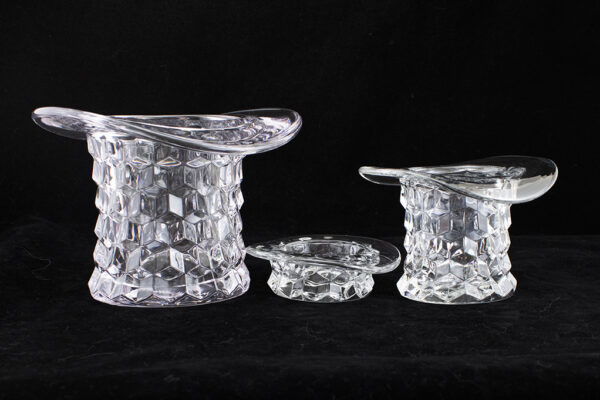
Founded in 1887 in Fostoria, Ohio, by L. B. Martin and W. S. Brady, the Fostoria Glass Company became America’s premier manufacturer of high-end, handmade “Elegant Glass”. While many mid-century glassmakers focused on inexpensive machine-molded pieces, Fostoria built its reputation on hand-blown crystal, delicate acid etches, and intricate wheel cuts. Operating for nearly a century until its factory closed in 1986, Fostoria tableware graced fine dining rooms across the nation, including every U.S. White House administration from Dwight D. Eisenhower through Ronald Reagan.
Company History Summary
- Origins & Relocation (1887–1891): Fostoria opened its doors using local natural gas supplies in Ohio. When gas fields depleted shortly after, the company relocated in 1891 to Moundsville, West Virginia, where it remained for the rest of its history.
- Shift to Elegant Glass (1910s–1920s): Fostoria pivoted from oil lamps and basic tableware to high-quality blown stemware. In 1926, the company partnered with legendary industrial designer George Sakier, initiating a 50-year creative era that produced iconic geometric and modern shapes.
- Peak Era & Post-War Success (1930s–1950s): While producing accessible lines during the Great Depression, Fostoria maintained strict quality standards, hand-polishing and fire-finishing its pieces. Production peaked in 1950, when over 1,000 employees produced more than 8 million pieces of glass in a single year.
- Corporate Sale & Closure (1983–1986): Facing rising production costs, outmoded facilities, and cheap foreign imports, Fostoria was sold to the Lancaster Colony Corporation in 1983. The Moundsville plant permanently closed operations on February 28, 1986.
How to Identify Fostoria Glass
- Quality Features: Fostoria pieces feature fire-polished, smooth seams, ground bases on footed items, and exceptional optical clarity without widespread mold flaws or rough edges.
- Labels & Marks: Most vintage Fostoria was sold with temporary paper or foil labels (such as the black rectangle label) rather than molded signatures. Commemorative pieces released later in the 20th century by collector societies may bear an embossed “FGSA” mark.